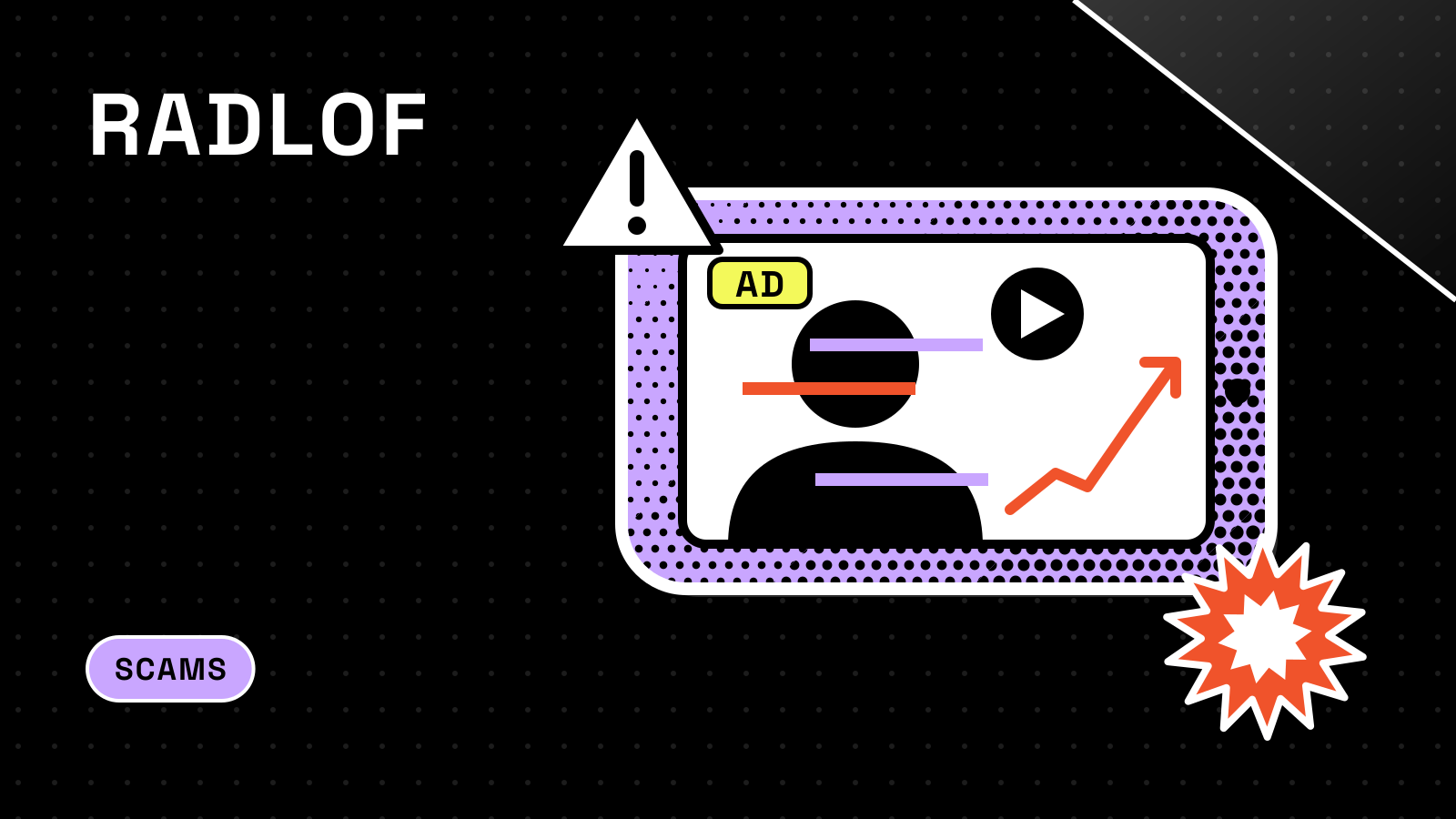
A deepfake investment scam uses an AI-altered video or photo of a famous person, often a billionaire, TV host or market analyst, to sell an investment that the person never endorsed. The ad is the bait: it sends you to a fake news page, a sign-up form or a WhatsApp group, and from there to a trading platform that shows invented profits until you try to withdraw.
The FBI’s 2025 Internet Crime Report says investment clubs “employ AI-generated videos and voices of celebrities, CEOs, or trusted figures to create fraudulent, high-stakes opportunities,” and that losses in investment complaints with a reported AI link “surpassed $632 million” in 2025. This guide explains how these ads work, what regulators say to check, and what to do if you already sent money. It is educational, not legal or investment advice.
What a deepfake investment scam looks like
The New York Attorney General’s office described the basic version in an August 29, 2024 investor alert. Scammers take existing footage of wealthy people “like Elon Musk, Jeff Bezos, and Warren Buffet” and use AI tools “to change the voice and mouth movements” so the person appears to recommend the scheme, which “often involve[s] cryptocurrency.” The clips are “served to social media users as advertisements or broadcast as fake livestreams on platforms like YouTube.” The same alert warns: “It can be difficult to tell from the video alone if it is a deepfake.”
The faces change with the news cycle and the country. Australia’s securities regulator, ASIC, said on August 17, 2026 that the most impersonated public figures in its 2026 financial year included Anthony Albanese, Jacqui Lambie, Angus Taylor, Tom Piotrowski and Alan Kohler, and that scams using those top names led to $7.4 million in losses reported to Scamwatch. In New York, the Attorney General’s April 6, 2026 alert lists ads on Facebook and Instagram that used Cathie Wood, Joe Kernen and Kevin O’Leary “without their permission,” plus less famous financial advisers “trusted by members of specific cultural or geographic communities.”
Not every scam ad uses a full video. Some use a still image, a cloned voice or a fake article with quotes. The FBI’s December 3, 2024 public service announcement lists all three: criminals “use AI-generated videos to create believable depictions of public figures to bolster their fraud schemes,” “use generative AI tools to create videos for fictitious or misleading promotional materials for investment fraud schemes,” and “generate content for fraudulent websites for cryptocurrency investment fraud.”
How the ad turns into a loss
Regulators describe the same chain of steps. The deepfake only gets you to the first one.
| Stage | What happens | Who describes it |
|---|---|---|
| 1. The ad | A post or video shows a famous person promising an “insider” group, free classes or a trading system | NY AG, 2026 |
| 2. The fake proof | You land on a page “often resembling a news article” or a site with fake reviews | NY AG, 2026, ASIC, 2026 |
| 3. The move | You leave a phone number or join a WhatsApp or Telegram group, “away from platform moderators” | NY AG, 2026 |
| 4. The platform | A “coach” or “assistant” has you open an account on an app or site that shows profits | SEC investor alert, 2025 |
| 5. The exit fee | When you try to withdraw, you are told to pay a fee, tax or deposit first | SEC investor alert, 2025, FBI report |
| 6. The second scam | A “recovery” firm offers to get the money back for a fee | NY AG, 2024, FCA |
The SEC’s December 22, 2025 alert on group chats says the leader of a fake chat may be “a well-known person who is being impersonated, sometimes using artificial intelligence (AI) such as ‘deepfake’ videos. Or the leader may be a completely made-up person.” It adds that “just because an app is available on a well-known app store doesn’t mean that the app itself, or any trading activity you see within it, are legitimate.” The same alert summarizes the SEC’s case against Morocoin and related “clubs,” which, according to the SEC’s complaint, recruited investors through social media ads “including ads featuring deepfake videos of prominent financial professionals” and later charged “bogus fees” to withdraw.
ASIC adds a detail that matters if you plan to check an offer with a quick web search: scammers “build an online footprint of supportive news articles, positive reviews, ads and websites that work together to deceive consumers.” ASIC Chair Sarah Court put it plainly: “A simple online search is not enough to verify whether an opportunity is legitimate.”
Two versions: fake platforms and pump-and-dump groups
Some deepfake ads lead to a fake trading platform where no trading happens. Others lead to a real stock that the group is pushing. The New York Attorney General calls this a pump-and-dump: victims are told to buy a low-priced stock or coin, the operators “sell when the price is high, while the victims lose their money.” The FBI’s July 3, 2025 alert calls it “ramp-and-dump” and says that “so far in 2025, the FBI has seen at least a 300 percent increase in victim complaints referencing ramp-and-dump stock fraud from 2024.” Its warning signs include “claims from well-known financial advisors or wealth managers offering exclusive stock recommendations through these online clubs.”
The money in this version moves through a real brokerage account, so it can feel safer. It is not. The losses come from buying at a price the group inflated.
How big the deepfake investment scam problem is
The numbers below are reported losses. They count only people who filed a complaint.
- United States: The FBI’s Internet Crime Complaint Center (IC3) recorded $8,648,617,756 in investment fraud losses in 2025, the largest category in its 2025 report. Cryptocurrency investment fraud alone accounted for $7.2 billion. IC3 also counted 22,364 complaints with AI-related information and $893,346,472 in adjusted losses across all crime types.
- AI share: IC3 says investment losses with a reported AI link passed $632 million, while overall investment losses “exceeded $8 billion, demonstrating that many victims do not realize the extent AI may be involved in scams.”
- Australia: ASIC removed more than 19,400 online scams in its 2026 financial year, up 182%, including 7,051 fake investment platforms. A year earlier, ASIC reported shutting down more than 330 investment scam websites that used celebrity images in 2025 to that point, a 25% increase, and noted that Australians lost $945 million to investment scams in 2024, according to the National Anti-Scam Centre.
Individual losses can be large. The New York Attorney General’s 2026 alert describes a 46-year-old from New Hyde Park who “lost more than $1.3 million” after clicking a Facebook ad “falsely featuring Savita Subramanian” of Bank of America Merrill Lynch that promised “a 60-80% return on investment.”
How to spot a deepfake investment ad
You may not be able to prove a video is fake. You can still decide not to act on it. Regulators agree that the offer, not the video quality, is the stronger signal.
Red flags in the offer. The New York Attorney General lists promises of guaranteed returns, warnings that you will “miss out,” celebrity endorsements, requests to use crypto ATMs or send crypto to private wallets, requests to accept other people’s money into your bank account, and “platform hopping” to WhatsApp or Telegram. The joint SEC, NASAA and FINRA alert from January 25, 2024 flags unregistered platforms claiming things like “Our proprietary AI trading system can’t lose!”
Red flags in the messenger. The 2026 New York alert says: “Most reputable broker-dealers and investment advisors do not post specific investment advice on social media platforms,” and “Famous figures do not usually provide financial advice online or advertise investments in obscure cryptocurrency trading platforms.”
Red flags in the video. The FBI suggests looking for “distorted hands or feet, unrealistic teeth or eyes, indistinct or irregular faces, unrealistic accessories such as glasses or jewelry, inaccurate shadows, watermarks, lag time, voice matching, and unrealistic movements.” New York’s alert adds a simpler test: if “the audio doesn’t perfectly match the lip movements, it may be a deepfake.” Treat these as hints only. A clean-looking video proves nothing.
What a celebrity endorsement does not prove. The SEC, NASAA and FINRA alert says that even a real endorsement “does not mean that an investment is legitimate or that it is appropriate for all investors,” and suggests asking: “Why is this person endorsing this investment, and does it fit in my financial plan?”
What a livestream does not prove. “Even if it appears to be a livestream, this could in fact still be a deepfake,” the 2024 New York alert says.
How to check a celebrity investment ad before you click
These checks take a few minutes and do not depend on judging the video.
- Find the original footage. New York’s alert suggests a reverse search: “check reliable sources for previous interviews of the speaker. Fraudsters will often utilize footage from an existing public video or audio.” If the clip matches an old interview about something else, you have your answer.
- Look up the firm, not the face. In the US, the joint alert points to the free Check Out Your Investment Professional search on Investor.gov, and New York points to FINRA’s BrokerCheck. In the UK, the FCA says almost all financial firms must be authorized and tells you to use its Firm Checker. In Australia, ASIC says to verify the license holder’s name and number on its professional registers and check the Moneysmart Investor Alert List.
- Make sure the details match. ASIC warns that scammers claim licenses they do not have, use “another entity’s licence number,” or impersonate licensed firms. The FCA says to check that the firm reference number and contact details match its register, and to use only the contact details listed there. The SEC suggests calling the phone number in a firm’s Form CRS rather than one given in a chat.
- Do not move to a private chat. A request to continue on WhatsApp, Telegram or Signal is on both New York lists of red flags.
- Do not install anything a stranger suggests. New York says not to “allow anyone you do not know well to access your computer or mobile phone remotely,” and the FCA warns that downloading untrusted software can let scammers “take control of your device and access your bank account.”
- Ask how you would get the money out. If the only route out is a fee, a “tax” or a new deposit paid to the same people, the SEC and the FBI both describe that as the end stage of the scam.
The CFTC’s Office of Customer Education and Outreach reduced the advice to one line in a March 19, 2025 release: “The best defense is to never give money to people you only meet online.”
What Meta, Google and YouTube say they do
The platforms say these ads break their rules. That does not mean every ad gets caught.
Meta. Meta calls the tactic “celeb bait.” In an October 21, 2024 post, it said that when its systems suspect an ad is a scam featuring a public figure, it may compare faces in the ad to that person’s Facebook and Instagram profile pictures and block the ad if it confirms a match and a scam. In an update dated September 28, 2025, Meta said user reports of celebrity-bait ad scams, “out of total ad impressions, dropped by 22% globally” in the first half of 2025, and that it was expanding the tool to the UK, the EU and South Korea. On February 26, 2026, Meta said the program “currently protects the images of more than 500,000 celebrities and public figures,” and announced a lawsuit against a China-based company it said used celeb-bait ads “as part of a larger fraud scheme that lured people into joining so-called investment groups.” The same post describes “cloaking,” where a linked page shows Meta’s reviewers one version and real users another.
Google. A Google Ads policy update effective March 2024 bans ads that entice people “to part with money or information by impersonating or falsely implying affiliation with or endorsement by a public figure, brand, or organization.” Google says it will “suspend your Google Ads accounts upon detection and without prior warning.”
YouTube. YouTube’s help page says you can report an ad that violates Google’s ad policies while it is displayed or through a form, and admits that “our reviews don’t always get it right.” Reporting from the ad itself works on YouTube mobile and computer.
Report the ad on the platform where you saw it, using the menu on the ad. The 2024 New York alert asks people to report deepfake content “to law enforcement and the social media platforms they appear on.”
What to do if you already sent money
Speed matters most in the first hours, because, as the New York Attorney General notes, these transactions “are almost always irreversible,” especially crypto.
- Stop paying. Do not pay any withdrawal fee, tax, “unfreeze” charge or deposit. The SEC says that after you pay, “the fraudsters likely will stop answering your messages.”
- Call your bank or card issuer using the number on your card or the bank’s own website. Ask whether a transfer that has not gone through can be stopped and whether to replace cards or accounts the scammers saw. Australia’s Scamwatch guidance, quoted by ASIC, lists your bank first among the places to report.
- Cut remote access and secure accounts. Remove any remote-access app you installed, change passwords from a clean device, and turn on multi-factor authentication, which the 2024 New York alert recommends “on all your accounts, particularly those related to finance and email.”
- Save everything. Keep the ad (a screenshot and the link), the chat history, the platform’s web address, wallet addresses and payment receipts. The FBI asks for the date, type of payment, amount, account numbers, receiving bank, receiving cryptocurrency addresses and how contact started.
- Report it to the right agency (see the table below) and to the platform that ran the ad.
- Expect a recovery pitch and refuse it. The FCA warns that victims may be “contacted with an offer to get your money back or to buy back an investment after you pay a fee,” known as recovery room scams. New York says some so-called recovery specialists “may even be scammers themselves.”
If large sums, a loan or a retirement account are involved, talk to a lawyer or a licensed financial professional you find yourself, not one introduced by anyone in the chat.
| Where you live | Report fraud to | Report the firm or promoter to |
|---|---|---|
| United States | FBI Internet Crime Complaint Center at ic3.gov (source) | SEC at sec.gov/tcr, FINRA’s complaint form, or your state securities regulator (source) |
| New York | NY Attorney General: online or 1-800-771-7755 (source) | Same office |
| United Kingdom | Report Fraud: 0300 123 2040 (source) | FCA: 0800 111 6768 |
| Australia | Your bank, cyber.gov.au and Scamwatch (source) | ASIC |
How we checked this
We read investor alerts and reports from the FBI’s IC3, the SEC with NASAA and FINRA, the CFTC, the New York Attorney General, the UK FCA and Australia’s ASIC, plus Meta’s newsroom posts and Google and YouTube policy and help pages. Loss figures are reported losses from complaints and undercount the real total. Platform statements describe what each company says it does, not independent results. Facts checked on October 23, 2026.